
₹920-Crore Road Turns Into a Nightmare, Only 48% Work Done
For the residents and daily commuters of Khayerpur–Champaknagar, the question remains: where is the promised road to development, and who will take responsibility for the nightmare they are enduring?
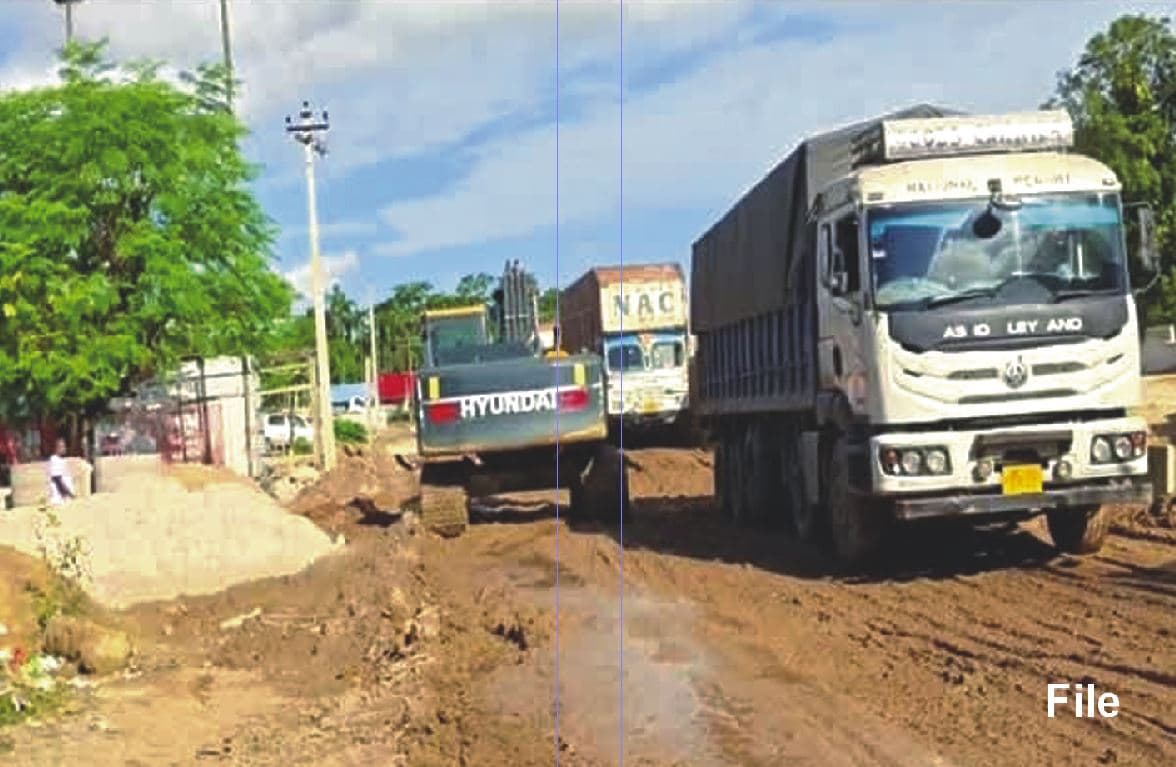
Agartala, October 8: Residents travelling along the Khayerpur–Champaknagar road and people in several other parts of Tripura are facing a nightmarish situation, as an ambitious four-laning project worth ₹920.66 crore has turned their daily commute into an ordeal. The conditions are reminiscent of an era when properly planned roads were absent and people had to negotiate dangerous routes to reach their destinations.
The project was intended to provide a modern four-lane road and was scheduled for completion within a fixed timeframe. However, the deadline expired on September 28, 2026, with only 48 per cent of the work completed. The remaining 52 per cent is still unfinished, leaving thousands of commuters to suffer from dangerous road conditions, massive potholes, uneven surfaces, dust and traffic congestion.
The extent of public suffering cannot be measured merely in percentages. Large potholes have appeared at several locations, while stretches dug up for construction have become hazardous for motorists and pedestrians alike. Even people accustomed to walking along the road have experienced the difficulties of navigating these damaged and incomplete sections.
The situation has deteriorated to such an extent that the state Public Works Department (PWD) has had to step in temporarily to make the road usable, rather than leaving the responsibility entirely to the National Highways and Infrastructure Development Corporation Limited (NHIDCL).
This raises a fundamental question: why has a project of such importance failed to meet its original deadline despite an investment of hundreds of crores of rupees?
The 19.11-kilometre Khayerpur–Champaknagar stretch was taken up for four-laning in 2024, with an approved project cost of ₹920.66 crore. The contract was awarded to New India Contractor and Development Private Limited on September 28, 2024. Under the agreement, the work was supposed to be completed within 24 months, by September 28, 2026.
Yet, by the end of the contractual period, barely 48 per cent of the work had been completed. The contractor reportedly submitted bills for the work undertaken, and the payments were approved. Allegations have also surfaced from local labour organisations that the company left without paying workers their outstanding wages.
According to sources, the contractor frequently visits Agartala and holds discussions with influential individuals. However, the question of unpaid wages remains unanswered. While allegations concerning the contractor's conduct continue to circulate, local workers are reportedly still waiting for their dues.
The consequences of the unfinished project are visible every day. The road, used by thousands of people, has become a source of persistent hardship. Some stretches are riddled with deep potholes, others are uneven, and several sections remain cut open for construction. Heavy vehicles generate clouds of dust, while repeated jolts and traffic congestion make travelling along the route increasingly difficult.
Motorcyclists, auto-rickshaw drivers, small-car owners and public transport operators are among those facing the greatest difficulties. For commuters, the issue is no longer simply the slow pace of construction. It is also about the failure to ensure that an unfinished road remains safe and reasonably usable until the project is completed.
Questions have been raised over whether the construction agency made adequate arrangements to maintain temporary access and protect road users. Commuters allege that the necessary precautions and maintenance measures have been grossly inadequate. Despite the hardships faced by the public, the contractor is alleged to have received payments for the work completed and subsequently left the site.
The episode has also raised concerns about accountability in the implementation of major infrastructure projects. Can a project worth ₹920.66 crore be allowed to fall so far behind schedule without clear answers about responsibility, public safety and the plight of unpaid workers?
Administrative sources said the state government had repeatedly drawn NHIDCL's attention to the situation, but the necessary corrective measures were not taken. In view of the growing public inconvenience, a special meeting was held last week involving state administrative officials, PWD representatives and NHIDCL officials.
Following the meeting, the state PWD was assigned the temporary responsibility of making the damaged stretches usable. The department has reportedly initiated steps to repair the affected portions of the Khayerpur–Champaknagar road before Durga Puja, offering some hope of relief to commuters.
However, temporary repairs cannot substitute for the completion of the main four-laning project. The deadline has now been extended to March 31, 2027, meaning the contractor has been granted additional time beyond the original 24-month schedule.
The extension has intensified questions over the reasons for the delay and whether the remaining 52 per cent of the work can be completed within the revised timeframe. If only 48 per cent of the project was completed during the original contractual period, what assurance is there that the outstanding work will be finished by the new deadline?
The alleged non-payment of workers' wages adds another troubling dimension to the controversy. Local labour organisations have raised concerns about unpaid dues, while the Labour Department has faced criticism over its apparent silence on the issue. Reports that the contractor continues to visit Agartala and meet influential individuals have further fuelled questions about whether the workers' grievances are receiving adequate attention. These allegations require proper examination by the authorities.
The people of Tripura want better roads and improved connectivity. They should not, however, have to endure months of dangerous travel, dust, potholes and traffic congestion in exchange for the promise of modern infrastructure. Nor should workers who contribute to a public project be left struggling to recover their wages.
The Khayerpur–Champaknagar four-laning project was supposed to represent progress. Instead, its incomplete condition has become a symbol of public inconvenience and questions over accountability. The authorities must ensure immediate repairs, enforce road-safety requirements, examine the allegations concerning unpaid wages and establish clear responsibility for the delay.
A ₹920.66-crore road project cannot be judged merely by the amount sanctioned or the promises made at its launch. Its real value lies in whether it is completed on time, whether public money is properly utilised and whether people can travel safely.
For the residents and daily commuters of Khayerpur–Champaknagar, the question remains: where is the promised road to development, and who will take responsibility for the nightmare they are enduring?