
Rs 23 Lakh Building, Rs 15 Lakh Machinery, Yet Broom-Grass Processing Centre Remains Defunct
Despite an investment of nearly Rs 23 lakh in constructing a broom-grass processing and training centre and another Rs 15 lakh in purchasing machinery, the facility has reportedly remained non-operational since its inauguration. Today, the premises are gradually being overtaken by vegetation, doors and windows are deteriorating, and allegations have surfaced that electric fans have been stolen.
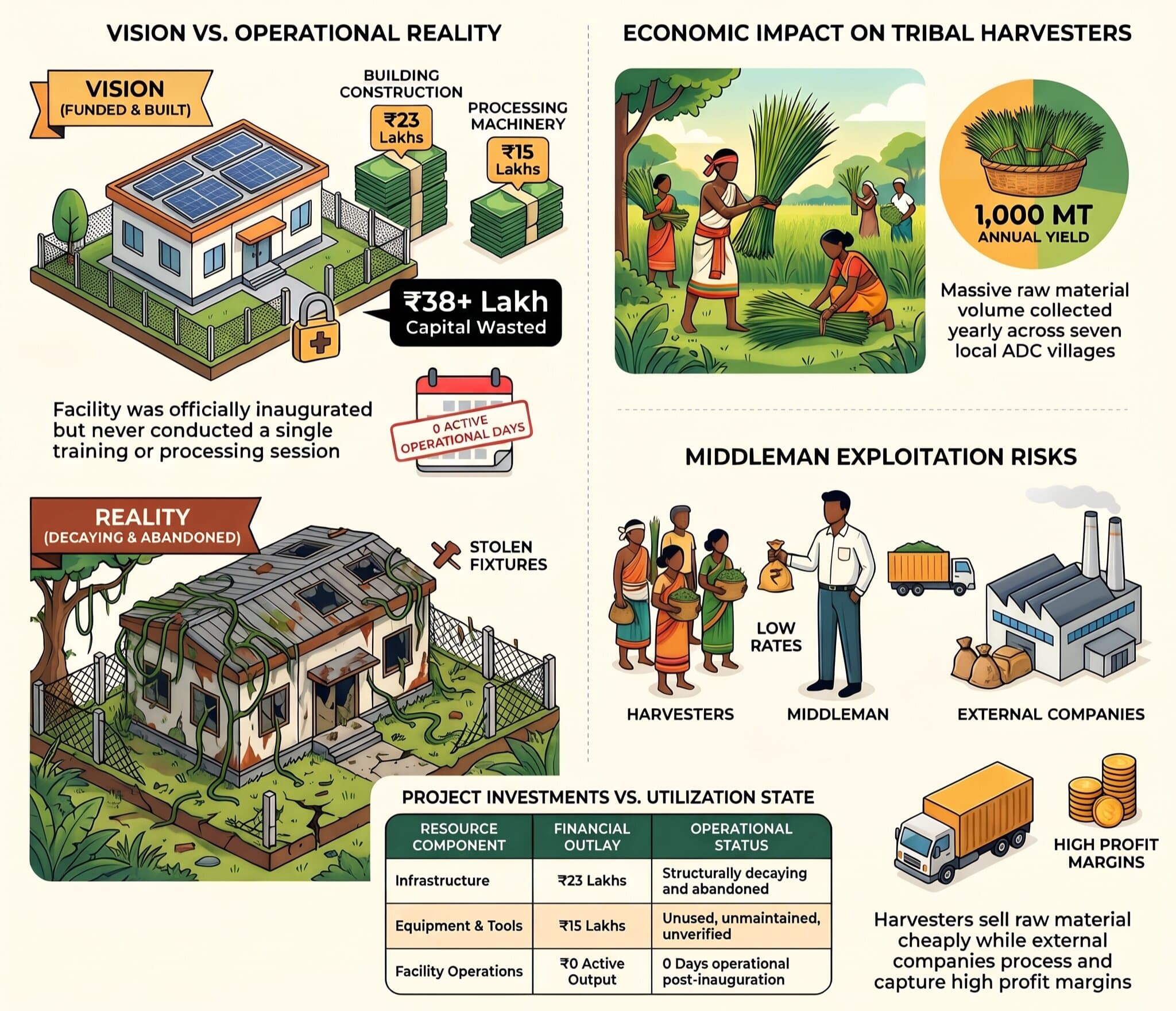
A project envisioned to promote self-reliance through forest-based resources and improve the livelihoods of broom-grass collectors has turned into an example of alleged administrative neglect in Tripura. Despite an investment of nearly Rs 23 lakh in constructing a broom-grass processing and training centre and another Rs 15 lakh in purchasing machinery, the facility has reportedly remained non-operational since its inauguration. Today, the premises are gradually being overtaken by vegetation, doors and windows are deteriorating, and allegations have surfaced that electric fans have been stolen. The centre, which was intended to empower local workers through skill development and better market access, now stands as a reminder of the gap between government announcements and actual implementation. Located at Bankumari under Makarachhara ADC Village in Chhamanu Block, the abandoned facility has triggered growing resentment among local residents, who are questioning why a project involving such a substantial public investment could not be made operational.
Chhamanu Block, under the Longtharai Valley subdivision, comprises 14 ADC villages, at least seven of which are major broom-grass-producing areas. Rajdhar, Malidhar, Gobindabari, Debachhara, North Longtharai, West Chhamanu and Manikpur are among the villages whose forest areas serve as important sources of broom grass. According to locally available information, approximately 1,000 metric tonnes of broom grass are produced annually in this region. The growth of broom-grass plants begins around September, while tribal workers collect the grass from forests during February and March before selling it in the market. Thus, broom grass is not merely a forest product in this region; it supports the livelihoods of numerous families and represents an important source of income for the rural economy.
Recognising this potential, the Tripura Rural Livelihood Mission (TRLM) initiated the construction of a broom-grass processing and training centre at Bankumari during the 2021-22 financial year, at an estimated cost of nearly Rs 23 lakh. The objective was to train members of Self-Help Groups (SHGs) in producing better-quality broom products and preparing them for organised marketing. Machinery worth approximately Rs 15 lakh was also procured for the facility. However, despite the investment in infrastructure and equipment, the centre has reportedly failed to begin operations even for a single day.
The prolonged inactivity of the facility has raised serious questions about the utilisation of public funds. What arrangements were made for maintaining the building after its construction? Where is the machinery worth Rs 15 lakh currently kept, and what is its condition? Is the equipment still functional and suitable for use? Were trainers, staff members and an operational mechanism appointed or planned to run the centre? Most importantly, was any assessment conducted after the facility failed to commence operations despite its inauguration? These are questions that the concerned authorities must answer.
Local residents allege that the premises are now gradually being covered by vegetation, while the doors and windows of the building are deteriorating. There are also allegations that electric fans have been stolen. Concerns have further emerged over the possibility of encroachment on the land allocated for the project. The condition of the facility has consequently raised questions about the level of administrative monitoring and protection provided to government property. When public infrastructure and equipment are left unattended in this manner, accountability becomes essential.
The biggest setback, however, is being faced by the forest-dependent workers who collect broom grass. According to local allegations, some traders and middlemen purchase the produce from collectors at relatively low prices. SHGs also collect broom grass and sell it to companies outside the state. These companies reportedly procure the raw material at comparatively lower prices, process it using their own facilities and subsequently market the finished products at higher prices across different parts of the country. As a result, serious questions remain over whether the forest workers who undertake the difficult task of collecting the raw material receive a fair share of the final market value.
Had the processing centre become operational, it could have helped transform this existing arrangement. Local workers could have received training in improved production techniques, sorting, quality control, packaging and marketing. SHGs would have had the opportunity to move beyond selling raw materials and enter the market with value-added products. An organised marketing mechanism could also have enabled local producers to establish direct links with buyers and companies in other states, potentially reducing their dependence on intermediaries.
However, such opportunities cannot be realised through infrastructure alone. Regular training, proper utilisation of machinery, market linkages and a sustainable operational mechanism are essential to make the project viable. The prolonged closure of the centre has therefore raised concerns about whether adequate planning was undertaken beyond the construction and inauguration stages.
Local demands are now growing for the authorities to disclose why the centre has remained non-operational and provide a detailed account of the machinery purchased at a cost of nearly Rs 15 lakh. Residents also want the land, building and other assets of the project to be secured immediately, along with a definite timeline for making the facility functional. A comprehensive plan to ensure fair prices for forest workers and strengthen the marketing role of SHGs is equally necessary.
The central question remains: who will be held accountable if government investment exceeding Rs 38 lakh, made in the name of self-reliance, remains locked away without delivering any tangible benefit? Will the broom-grass collectors of Bankumari continue to remain confined to gathering raw materials and selling them at low prices, while a larger share of the profits goes to companies and intermediaries elsewhere?
A centre that was supposed to create employment and strengthen the local economy is now gradually disappearing behind overgrown vegetation. Development cannot be measured merely through foundation stones, inauguration ceremonies or project expenditure. Its success must be reflected in increased incomes, employment opportunities and tangible improvements in people's lives. The people of Bankumari are still waiting for answers: when will the doors of the processing centre finally open, when will the machinery be put to use, and when will the workers receive fair value for their labour? These questions can no longer be ignored by the state government.