
Where Will Tarpan Be Held? Agartala’s Devout Left Confused
With Pitru Paksha Tarpan approaching, questions are therefore being raised over how an important traditional religious water body in the state capital has been allowed to remain without a clear administrative and religious arrangement, despite the longstanding tradition associated with it.
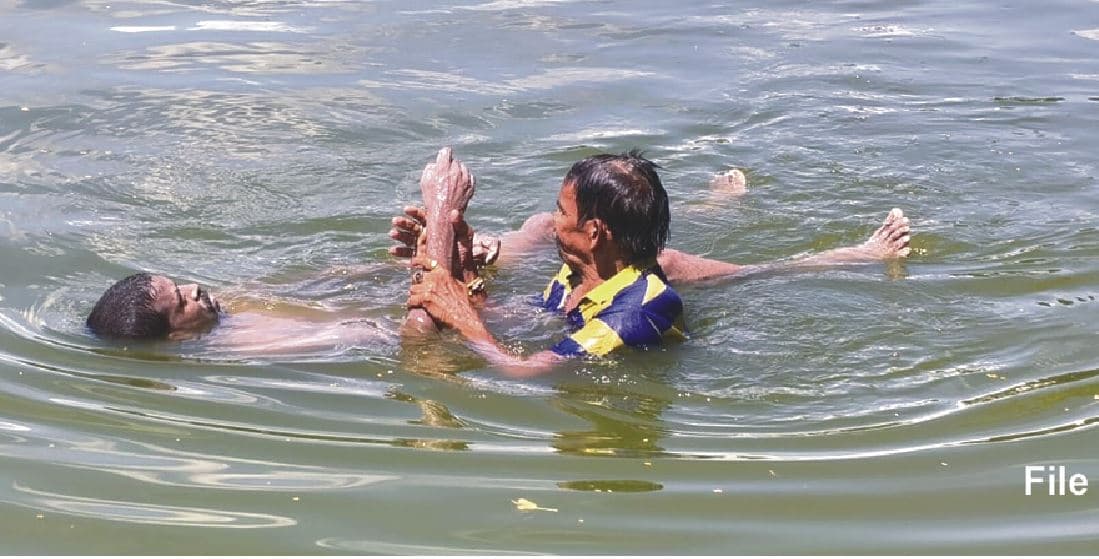
Agartala, October 7: According to Sanatan religious beliefs and traditional practices, when an unnatural death or suicide takes place in a pond or any other sacred water body used for Tarpan, certain religious and social rituals are required to be performed immediately alongside the necessary legal procedures. However, with Pitru Paksha Tarpan approaching, no such religious purification measures appear to have been undertaken at the large Lakshminarayan Temple pond in Agartala, leaving devotees confused and concerned.
Only two nights remain before Tarpan for ancestors begins in the early hours of the morning. Those who have traditionally performed Tarpan at this pond at dawn every year are now reportedly disappointed.
On September 26 morning, passers-by saw the body of a middle-aged man floating in the pond. The matter is currently under legal consideration at the police and judicial levels. In other words, the necessary legal procedures have been initiated. However, even after 11 days, no visible steps appear to have been taken regarding the religious practices traditionally associated with such an incident.
With no major river near Agartala, people of the city have traditionally performed Tarpan at the Lakshminarayan pond since the erstwhile princely era. However, there appears to be no significant initiative from the Lakshminarayan Temple authorities, who are responsible for the pond, to ensure that this tradition can continue without religious concerns.
Under temple and Debottar-related laws, the District Magistrate of West Tripura is the chief Sebait of the temple. It is therefore expected that the office of the chief Sebait would take an initiative to address the religious concerns. However, with no such initiative yet visible from the administration, Sanatan devotees in the city are reportedly worried ahead of Pitru Paksha Tarpan.
According to traditional scriptural beliefs, when an unnatural death occurs in a sacred water body or a dead body remains in the water for a considerable period, the water is temporarily considered impure. Several religious purification practices are traditionally prescribed before the pond is brought back into religious use.
First, the owner of the pond is required to perform penance and offer prayers, traditionally on an Amavasya night. Second, the water is purified by sprinkling Panchagavya or Ganga water. This involves sprinkling a mixture of Ganga water, cow urine, cow dung, milk, curd and ghee throughout the water body or at its principal ghats.
Third, Shanti-Swastyayan and Punyaha Vachan are performed. Following the advice of priests, rituals including remembrance of Lord Vishnu, Narayan Puja and a special Shanti Yagna are traditionally organised on the banks of the pond or at the temple.
Fourth, the ghats are kept closed and the use of the water is prohibited until the prescribed purification rituals and religious ceremonies are completed. The pond water is traditionally not to be used for religious activities, worship or cooking during this period.
Fifth, as the incident is considered an ‘unnatural death’ rather than a natural death, certain additional rituals are traditionally prescribed for the spiritual well-being of the deceased. According to beliefs associated with the Garuda Purana, rituals such as Narayan Bali or Tripindi Shraddha may be performed. Such rituals are traditionally considered important to address the belief of a troubled or unsettled spiritual state following an unnatural death.
Since the administrative head of the district is also the chief Sebait of the temple associated with the pond, social and environmental considerations are also being raised. One such concern is water testing. If a body remains underwater for a prolonged period, there may be a risk of bacterial contamination or pollution. Alongside religious purification, measures such as disinfection using bleaching powder or lime may also be considered.
Another concern is safety. Since large numbers of people are expected to gather for Tarpan in the early morning, warning signs and safety railings could be installed at deeper sections and potentially dangerous ghats to prevent any recurrence of accidents.
For a large pond with such a longstanding religious tradition, merely relying on the direct instructions of the temple committee and priests may not be sufficient. Intervention from the office of the Sebait and the administration is considered necessary.
However, questions are being raised over the apparent inaction of the chief Sebait’s office even 13 days after the incident.
It is learnt that, as part of the Shanti-Swastyayan process, the chief priest of the temple has kept the temple ghat closed and issued instructions preventing people from using the pond water for worship and religious purposes.
However, the pond has several other ghats, including the ghat in front of Bikray Kar Bhavan, the ghat in front of Town Hall and the ghat adjacent to Kali Temple. People unfamiliar with the circumstances may unknowingly collect and use water from these ghats for religious purposes.
The responsibility for preventing such use cannot rest solely with the priest. Devotees and local residents believe that intervention by the Sebait’s office and the administration is necessary.
With Pitru Paksha Tarpan approaching, questions are therefore being raised over how an important traditional religious water body in the state capital has been allowed to remain without a clear administrative and religious arrangement, despite the longstanding tradition associated with it.